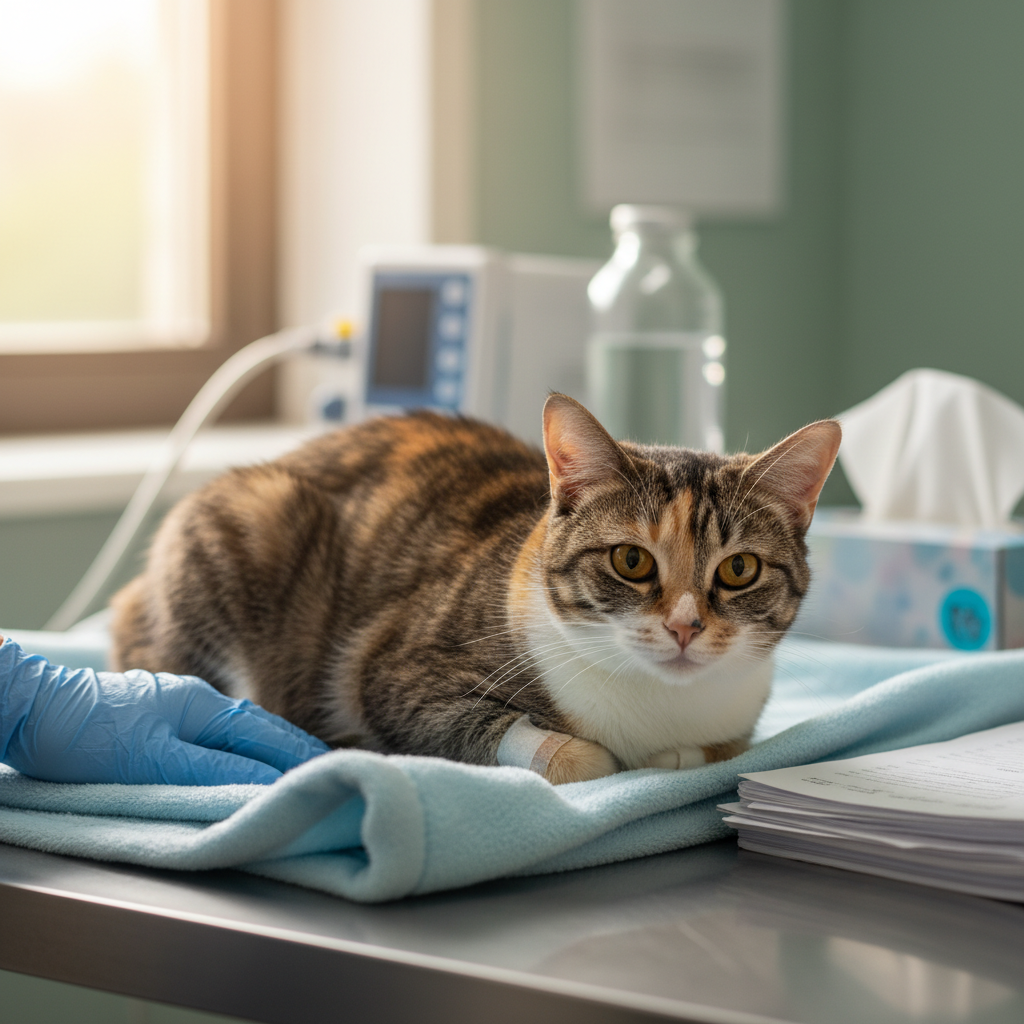
FIP (Feline Infectious Peritonitis): A New Era of Hope for Our Feline Friends
For many years, the diagnosis of Feline Infectious Peritonitis (FIP) was a death sentence for cats. This devastating disease, caused by a mutation of the common Feline Enteric Coronavirus (FCoV), has brought heartbreak to countless pet owners and rescuers worldwide, including here in Morocco. However, recent scientific breakthroughs have completely transformed the prognosis for FIP, ushering in an era of unprecedented hope.
Understanding FIP: The Disease and Its Forms
FIP manifests in various forms, making its diagnosis challenging. It primarily affects young cats, though it can occur at any age. Most cats infected with FCoV show no symptoms or mild gastrointestinal signs. It's only when the virus mutates within the cat's body that FIP develops, leading to a systemic inflammatory response. The two main forms are:
- Wet (Effusive) FIP: Characterized by fluid accumulation in the abdomen (ascites) or chest (pleural effusion), leading to a distended belly or difficulty breathing. Cats often present with fever, lethargy, and loss of appetite.
- Dry (Non-Effusive) FIP: More challenging to diagnose, as it involves inflammatory lesions in various organs like the kidneys, liver, eyes, or brain. Symptoms can be vague, including persistent fever, weight loss, neurological signs (seizures, ataxia), or ocular changes.
Diagnosis: A Multifaceted Approach
Diagnosing FIP accurately requires a combination of clinical suspicion, detailed history, and laboratory tests, as no single test is definitive for all forms. In Morocco, veterinarians rely on:
- Clinical Signs and History: A thorough examination and understanding of the cat's symptoms and environment are crucial.
- Blood Tests: Common findings include elevated globulins, a low albumin-to-globulin ratio (A:G ratio), and lymphopenia.
- Fluid Analysis (for wet FIP): Collection of effusive fluid can be tested with a Rivalta test (a simple, quick indicator) and analyzed for its protein content and cell count. PCR testing on the fluid for FCoV RNA is highly indicative of FIP.
- Imaging: X-rays or ultrasound can identify fluid accumulation or organ changes.
- FCoV Antibody/PCR Tests: While helpful, these tests only indicate exposure to FCoV, not necessarily FIP itself. A positive FCoV PCR on tissue biopsies or effusion fluid is much more significant than a fecal or blood PCR for FCoV.
Given the limitations in advanced molecular diagnostics in some regions of Morocco, a veterinarian's clinical expertise and careful interpretation of available tests are paramount.
The Game Changer: Antiviral Treatments (GS-441524 Research)
The scientific community's understanding of FIP underwent a revolution with the discovery of potent antiviral drugs. The most significant of these is GS-441524, a nucleoside analogue. Research, particularly from the University of California, Davis, demonstrated that GS-441524 effectively blocks the replication of the FIP virus (Feline Coronavirus) within the cat's cells. Clinical trials showed astonishing success rates, with 80-90% of treated cats achieving full recovery.
Another promising antiviral, Molnupiravir, also a nucleoside analogue, has shown similar efficacy in recent studies, offering another potential treatment option. These drugs are typically administered daily for an 84-day course, either via injection or, increasingly, as oral formulations. Dosage is tailored to the cat's weight and the form of FIP (e.g., neurological FIP often requires higher doses).
Availability in Morocco: This is a critical point. While these treatments are widely recognized for their efficacy, they are not yet officially approved by many national regulatory bodies, including potentially Morocco's ANMV (Agence Nationale de Sécurité Sanitaire des Produits Alimentaires, Médicaments Vétérinaires et Phytosanitaires). This means access often relies on unofficial channels or compassionate use programs. Pet owners and rescuers in Morocco face challenges in sourcing these medications, which can also be prohibitively expensive. It is vital to work closely with a knowledgeable veterinarian who can guide you on the best course of action and help navigate these challenges.
Survival Rates and Prognosis
Before GS-441524, FIP was almost universally fatal, with cats typically succumbing within weeks or months of diagnosis. Today, with timely and appropriate antiviral treatment, the survival rates are remarkably high, often exceeding 80-90%. Factors influencing prognosis include early diagnosis, the specific form of FIP (neurological or ocular forms can be more challenging but are still treatable), the cat's overall health, and consistent adherence to the treatment protocol. Relapses occur in a small percentage of cases (around 5-15%) but are often successfully treated with an extended course of medication.
Practical Advice for Pet Owners and Rescuers in Morocco
1. Early Detection is Key: Be vigilant for any changes in your cat's behavior, appetite, activity levels, or physical appearance. Persistent fever, lethargy, unexplained weight loss, or abdominal distension warrant immediate veterinary attention. 2. Consult Your Veterinarian Immediately: If you suspect FIP, contact your trusted veterinarian without delay. They are your best resource for diagnosis and treatment options. 3. Hygiene in Multi-Cat Environments: FCoV, the precursor to FIP, spreads easily in crowded conditions. Maintain strict litter box hygiene, ensure adequate space, and reduce stress in multi-cat households or shelters. Morocco's climate, with its warm temperatures, can sometimes contribute to the proliferation of viruses if sanitary conditions are not optimal. 4. Advocacy for Official Access: Support efforts to advocate for the official approval and regulated availability of FIP treatments in Morocco. This will ensure safer, more reliable, and potentially more affordable access for all. 5. Seek Support: Connect with online communities or local groups that have experience with FIP. Sharing experiences and knowledge can be invaluable.
Conclusion
The landscape of FIP treatment has changed dramatically. What was once a death sentence now carries a strong prognosis for recovery thanks to groundbreaking antiviral medications. While challenges remain, particularly regarding access and cost in regions like Morocco, the message is clear: FIP is no longer untreatable. By working closely with veterinary professionals, staying informed, and advocating for better access, we can continue to save the lives of our beloved feline companions.