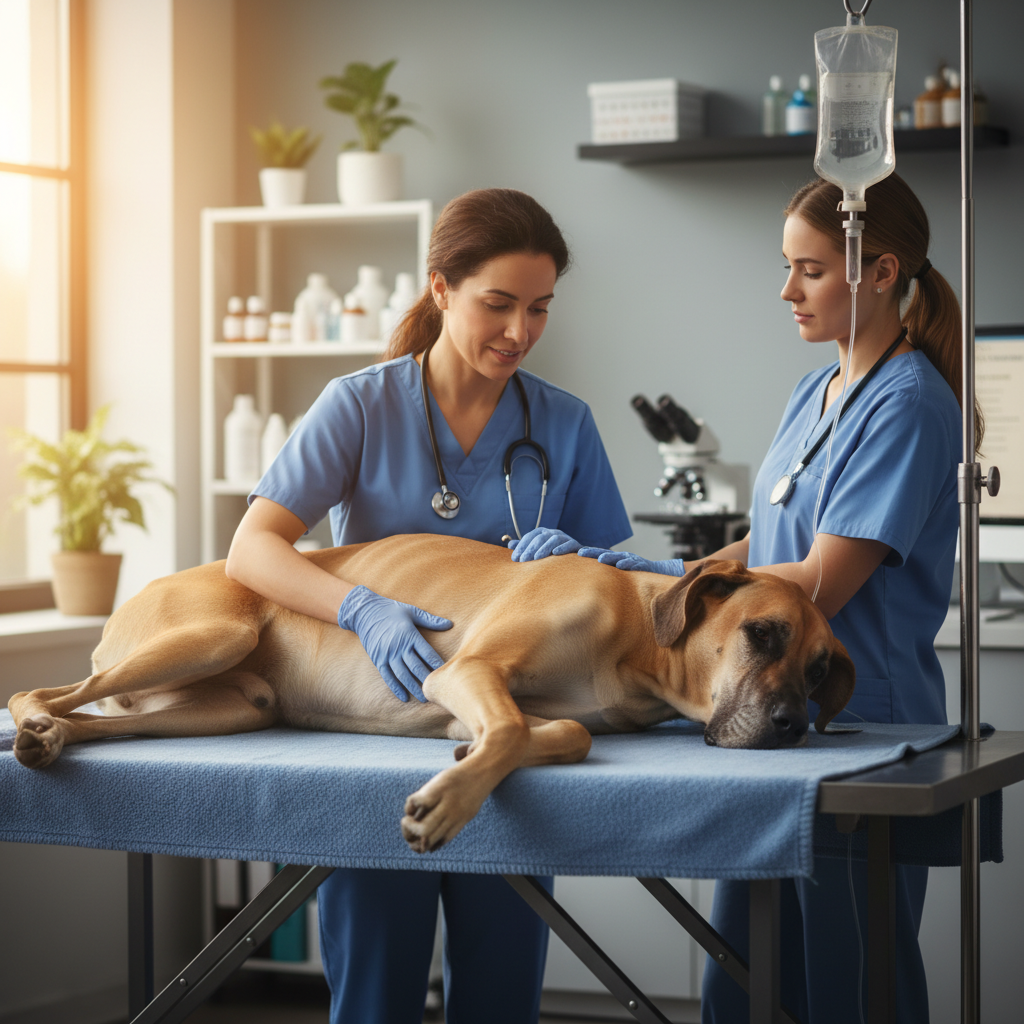
The Silent Threat: Understanding Gastric Dilatation-Volvulus (GDV)
As loving guardians of animals, we at Animal SoulSaver (جمعية حماية ارواح الحيوانات) are committed to equipping you with vital knowledge. One of the most terrifying and rapidly fatal conditions for large dogs is Gastric Dilatation-Volvulus (GDV), commonly known as bloat. This emergency occurs when a dog's stomach fills with gas, food, or fluid (dilatation) and then twists upon itself (volvulus). This twisting cuts off blood supply to the stomach and other organs, leading to shock and death if not treated immediately. GDV is a true veterinary emergency, where every minute counts.
Deep-chested, large, and giant breeds are most susceptible, including Great Danes, German Shepherds, Doberman Pinschers, Labradors, Boxers, and Setters. While the exact cause isn't fully understood, risk factors include genetics, age, eating one large meal a day, rapid eating, vigorous exercise after eating, and a stressful temperament.
Recognizing the Symptoms: Time is of the Essence
Identifying GDV early is crucial for survival. Look for these signs:
- Restlessness and Pacing: Your dog may seem uncomfortable, unable to settle.
- Drooling and Salivation: Excessive drooling can be an early indicator.
- Unsuccessful Vomiting (Retching/Gagging): This is a hallmark symptom. Your dog will try to vomit but produce little to nothing.
- Abdominal Distension: The abdomen, especially on the left side, may appear swollen and feel firm or taut to the touch. This can be subtle initially.
- Pain: Whining, groaning, hunching, or reluctance to move.
- Rapid, Shallow Breathing: As the condition progresses, breathing becomes labored.
- Pale Gums and Weakness: Signs of shock, indicating a critical stage. Your dog may collapse.
If you observe any of these symptoms, especially unsuccessful attempts to vomit and abdominal distension, consider it an immediate emergency. Do not wait for more symptoms to develop.
Emergency Response: Act Immediately
In Morocco, access to 24/7 veterinary emergency care can vary. In major cities like Casablanca, Rabat, or Marrakech, you may find clinics equipped for such emergencies. In more rural areas, immediate transport to the nearest well-equipped veterinary facility is paramount. Here’s what to do:
1. Call Your Veterinarian IMMEDIATELY: Do not hesitate. Inform them you suspect bloat and are en route. This allows them to prepare for your arrival. 2. Transport Safely and Quickly: Drive directly to the clinic. Minimize stress for your dog during transport. 3. DO NOT Attempt Home Remedies: Giving antacids, trying to force vomiting, or waiting will only delay critical treatment and can be fatal.
Upon arrival, the veterinary team will work quickly to stabilize your dog. This typically involves:
- Intravenous (IV) Fluids: To combat shock and maintain blood pressure (e.g., Ringer's Lactate solution, readily available in Morocco).
- Pain Management: Opioid analgesics (like tramadol, buprenorphine, or methadone, depending on availability and clinic protocol) are crucial to alleviate intense pain and reduce stress.
- Gastric Decompression: The vet will attempt to relieve the gas by passing an orogastric tube into the stomach. If this isn't possible, a needle (trocar) may be used to release gas directly through the abdominal wall.
- Antibiotics: To prevent bacterial translocation and infection.
Gastropexy Surgery: The Definitive Treatment and Prevention
Once your dog is stable, surgery is required to untwist the stomach and assess for any damage. Crucially, a procedure called gastropexy is performed. Gastropexy involves surgically attaching the stomach to the abdominal wall to prevent it from twisting again in the future. Without a gastropexy, the recurrence rate of GDV is extremely high (up to 80%).
Types of Gastropexy:
- Incisional Gastropexy: This is the most common method during an emergency GDV surgery, where an incision is made in the stomach wall and secured to the abdominal wall.
- Laparoscopic Gastropexy: A minimally invasive keyhole surgery, often performed electively on at-risk breeds, sometimes concurrently with spaying or neutering. This is the gold standard for prevention.
For high-risk breeds in Morocco, especially considering the potential for delayed emergency access, elective gastropexy is strongly recommended. It is a one-time investment that can prevent a life-threatening crisis and save you from unimaginable heartache and significant emergency veterinary costs.
Post-operative care involves continued IV fluids, pain medication, antibiotics, and gradual reintroduction of food and water. Prognosis depends heavily on the severity of the twist, the presence of gastric necrosis, and how quickly treatment was initiated.
Prevention Strategies for Moroccan Dog Owners
While gastropexy is the most effective preventive measure, you can also reduce the risk of GDV through these practices:
- Multiple Small Meals: Feed 2-3 smaller meals daily instead of one large meal.
- Slow Eating: Use slow-feeder bowls to prevent rapid ingestion of food.
- Restrict Exercise: Avoid vigorous exercise or play for at least one hour before and two hours after meals.
- Reduce Stress: Provide a calm feeding environment. Anxious dogs may be more prone to bloat.
- Consult Your Vet about Elevated Bowls: Recent research is mixed, with some studies suggesting elevated bowls may increase risk in large breeds. Always discuss feeding practices with your veterinarian.
- Elective Gastropexy: Seriously consider this preventive surgery for at-risk breeds, especially if you live in an area with limited 24/7 emergency veterinary services.
By understanding the risks, recognizing the symptoms, and acting swiftly, you can significantly improve the chances of survival for your beloved canine companion. Animal SoulSaver encourages all large dog owners in Morocco to discuss GDV prevention with their veterinarians. Your vigilance can save a life.
References:
- Glickman LT, Glickman N, Perez CM, et al. Non-dietary risk factors for gastric dilatation-volvulus in dogs. J Am Vet Med Assoc. 2000;217(10):1492-1499.
- O'Neill DG, Case J, De Decker S, et al. Gastric dilatation-volvulus in dogs: an epidemiological update. Vet Rec. 2021;188(1):e2.