Nurturing Hope: A Guide to Orphan Kitten Care in Morocco
Caring for an orphan kitten is one of the most rewarding yet challenging experiences for any animal lover. These tiny, vulnerable creatures depend entirely on human intervention for their survival. At Animal SoulSaver (جمعية حماية ارواح الحيوانات), we are dedicated to providing the knowledge and support needed to give these fragile lives the best possible start. This comprehensive guide, tailored with Moroccan context, will equip you with the essential tools for successful orphan kitten care.
The Critical First Step: Warmth
Newborn kittens cannot regulate their body temperature and are highly susceptible to hypothermia, which can be fatal. This is especially true in Morocco's varied climate, where nights can be cold, even after warm days. Maintaining a consistent ambient temperature of 29-32°C for the first week, gradually reducing it to 24°C by week four, is paramount. Use a heating pad set on low (with a towel barrier to prevent burns), a warm water bottle wrapped in a blanket, or even a simple lamp positioned safely above their box. Always ensure the kitten can move away from the heat source if it gets too warm.
Nourishing Little Lives: Feeding Orphan Kittens
The Gold Standard: Kitten Milk Replacer (KMR)
Kitten Milk Replacer (KMR) is specifically formulated to mimic a mother cat's milk, providing the precise balance of nutrients, fats, and proteins essential for rapid growth. Brands like Royal Canin Babydog Milk (which can be used for kittens) or specific KMR products are often available at larger veterinary clinics or specialized pet stores in major Moroccan cities like Casablanca, Rabat, or Marrakech. Always follow the manufacturer's mixing instructions meticulously, using clean, boiled water cooled to an appropriate temperature. Discard any unused formula after 24 hours.
Emergency KMR Alternatives in Morocco
While KMR is always the ideal choice, access can be challenging in rural areas or during emergencies. As a temporary, last-resort measure until KMR can be sourced, a highly diluted goat's milk can be considered. Goat's milk is generally better tolerated by kittens than cow's milk due to lower lactose levels, but it is still not nutritionally complete. A basic emergency formula might include: 1 part full-fat goat's milk, 1/4 part boiled water, and a tiny pinch of a probiotic supplement (like those found in pharmacies for infants) or a spoonful of plain, unsweetened yogurt. Crucially, this is an emergency measure only and should not be used long-term. Prolonged use of homemade formulas can lead to severe nutritional deficiencies and health problems. Prioritize finding genuine KMR as quickly as possible.
Preparation and Schedule
Hygiene is non-negotiable. Sterilize bottles, nipples, and mixing utensils before each use. Feed the formula at body temperature (around 37-38°C), testing a drop on your wrist. Kittens under one week old need to be fed every 2-3 hours, including overnight. As they grow (1-2 weeks old), feeding can extend to every 3-4 hours, then every 4-6 hours until they are ready for weaning (around 4 weeks). A general guideline is 2 tablespoons (30ml) of KMR per 115g of body weight per day, divided into the appropriate number of feedings. Adjust based on the kitten's hunger and weight gain.
Proper Feeding Technique
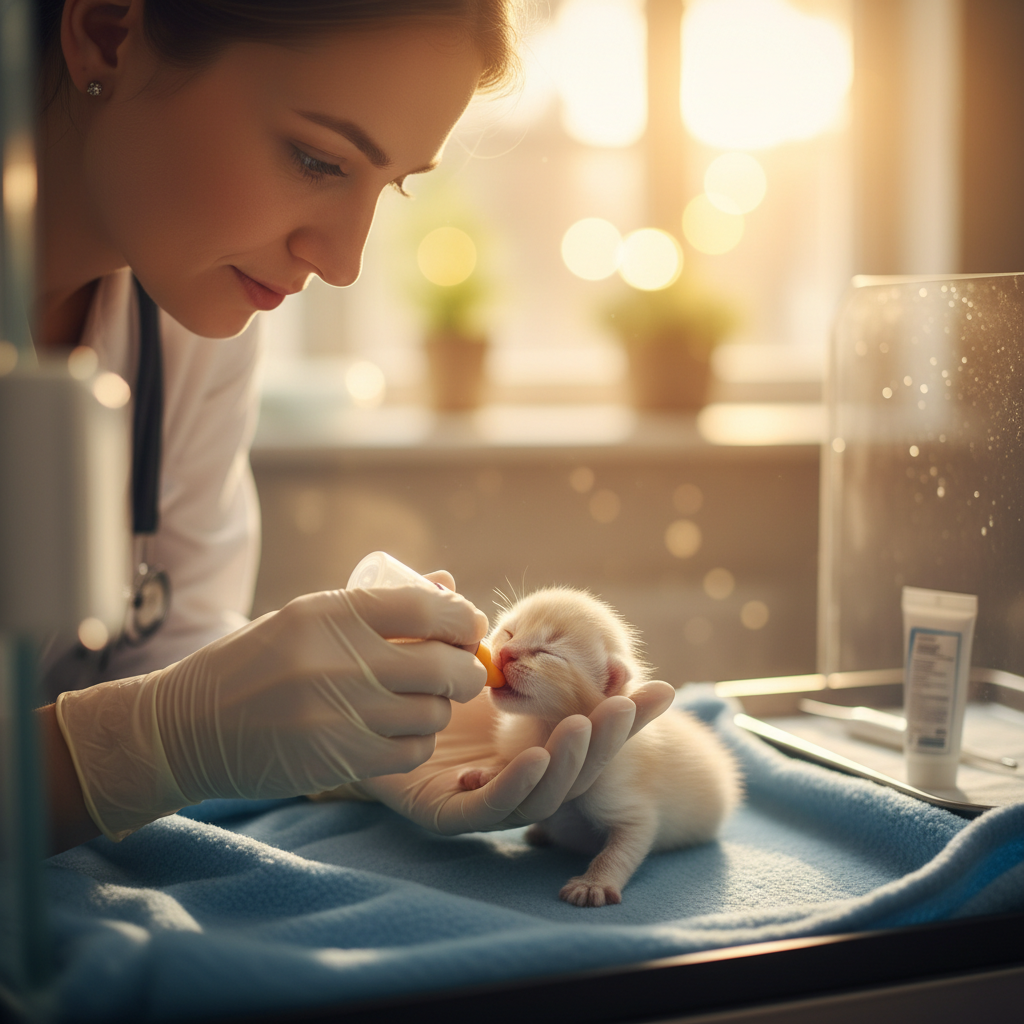
Position the kitten on its stomach, mimicking a natural nursing posture. Never feed a kitten on its back, as this can lead to aspiration. Gently introduce the nipple, allowing the kitten to suckle naturally. If using a syringe, administer drops slowly to avoid overwhelming the kitten. Watch for air bubbles in the bottle and avoid squeezing it. Stop when the kitten's belly is slightly rounded, and it pushes the nipple away. Burp the kitten gently by holding it upright and stroking its back.
Stimulating Elimination: A Natural Need
Newborn kittens cannot urinate or defecate on their own. The mother cat normally stimulates them by licking. You must replicate this process after each feeding. Use a warm, damp cotton ball or soft cloth to gently massage the kitten's anal and genital areas until it urinates and defecates. This typically takes 10-30 seconds. The urine should be light yellow, and feces should be soft, mustard-yellow. Greenish or watery stools are signs of illness.
Common Pitfalls to Avoid
- Feeding Cow's Milk: This is a common and dangerous mistake. Cow's milk is high in lactose and low in essential nutrients for kittens, leading to severe diarrhea, dehydration, and potentially death.
- Overfeeding or Underfeeding: Both can cause serious health issues. Follow guidelines, but also observe the kitten's condition and weight gain.
- Aspiration: Feeding too quickly or with the kitten on its back can cause formula to enter the lungs, leading to life-threatening aspiration pneumonia.
- Inadequate Warmth: Hypothermia is a silent killer. Always prioritize a warm environment.
- Poor Hygiene: Unclean bottles, nipples, or bedding can introduce harmful bacteria, causing infections.
- Ignoring Signs of Illness: Lethargy, persistent crying, refusal to eat, vomiting, severe diarrhea, or difficulty breathing are emergencies. Do not delay seeking veterinary help.
When to Seek Veterinary Help
Orphan kittens are fragile. Any deviation from normal behavior or health signs warrants immediate veterinary attention. Contact your local Moroccan veterinarian (médecin vétérinaire) if you observe: persistent diarrhea or vomiting, severe lethargy, inability to suckle, cold body temperature despite warming efforts, difficulty breathing, or any physical injury. Early intervention is crucial for survival.
Conclusion: A Rewarding Journey
Caring for an orphan kitten demands patience, dedication, and love. While challenging, witnessing a tiny, helpless creature grow into a healthy, playful cat through your efforts is an immensely rewarding experience. Animal SoulSaver thanks you for opening your heart and home to these precious souls. Together, we can make a profound difference in their lives.