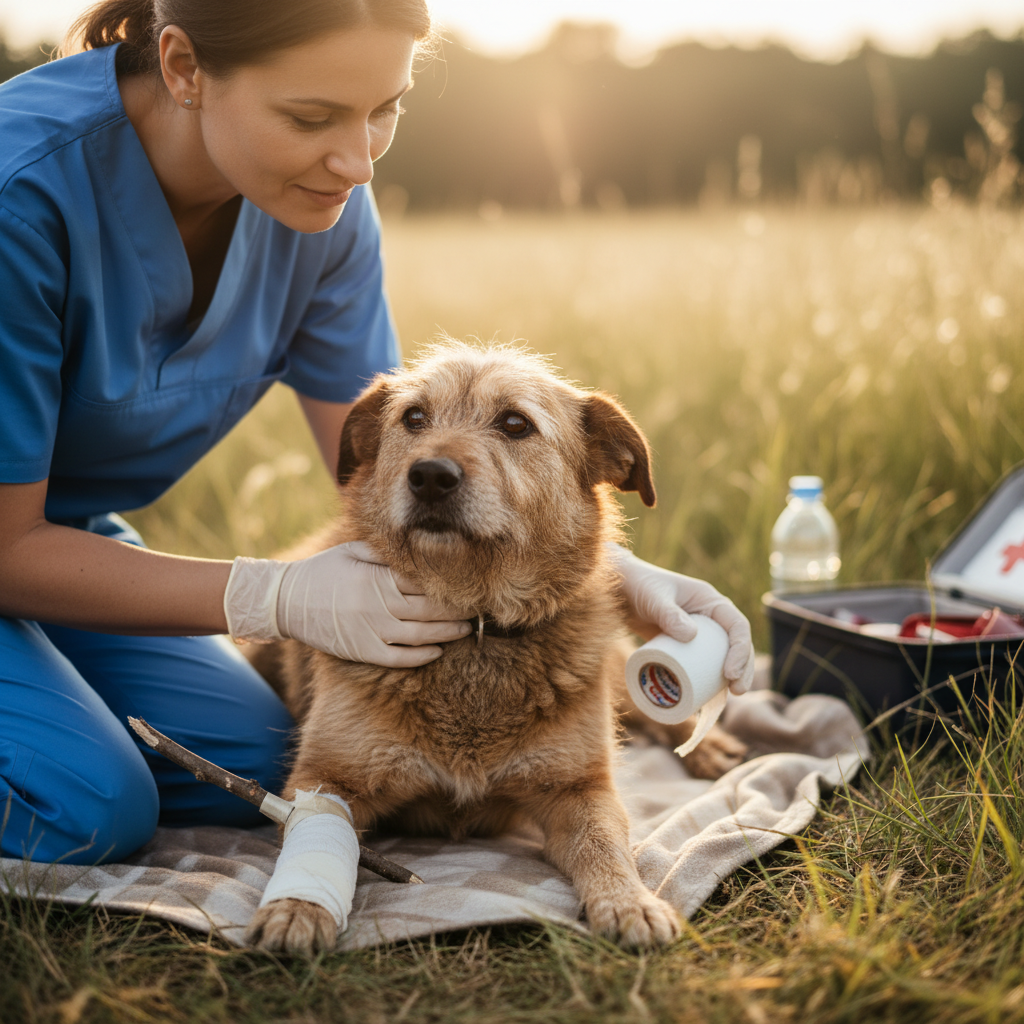
Fractures in stray dogs are a common and distressing occurrence, often resulting from road traffic accidents, falls, or abuse. As Animal SoulSaver (جمعية حماية ارواح الحيوانات) volunteers and compassionate citizens, your swift and correct first aid can significantly impact a dog's chances of recovery and a pain-free future. This guide provides actionable steps, grounded in veterinary science, for managing such emergencies.
Recognizing a Fracture
Identifying a fracture is the first step. Look for obvious signs such as severe lameness (non-weight bearing), swelling, pain upon touch, an abnormal limb angle, or visible bone (an open fracture). The dog may cry, whimper, or show aggression due to pain. Always approach an injured animal cautiously; even the gentlest dog can bite out of fear or pain. If safe, use a blanket or towel to gently cover the dog’s head or body to reduce stress and facilitate handling. A makeshift muzzle (e.g., using a strip of cloth) can be considered if the dog is aggressive and it can be applied without causing further distress or injury.
Immediate Stabilization and Pain Management
The primary goals of first aid are to minimize pain, prevent further injury, and control any bleeding. Do not attempt to reset a bone yourself. For open fractures where bone is exposed, cover the wound immediately with the cleanest material available (a clean cloth, gauze, or even a sanitary pad) to prevent contamination. If possible, moisten the material with clean water or sterile saline. Apply gentle, direct pressure to any bleeding wounds until it subsides. It is crucial NEVER to give human painkillers like paracetamol (Tylenol) or ibuprofen (Advil) to dogs; these are highly toxic and can cause severe organ damage or death. Pain relief must be prescribed by a veterinarian.
When and How to Splint (Temporary Immobilization)
Temporary immobilization (splinting) is vital for reducing pain and preventing further soft tissue damage during transport. However, it should only be attempted if it can be done without causing more pain or injury. If in doubt, prioritize gentle transport without a splint. For spinal or pelvic injuries, do not attempt to splint; instead, move the dog as a single unit on a rigid, flat surface.
For limb fractures, gather materials: a rigid support (rolled newspaper, cardboard, small sticks), padding (cotton, gauze, soft cloth), and medical tape or strips of cloth. Ensure the padding is generous, especially around bony prominences, to prevent pressure sores. The splint should extend beyond the joints immediately above and below the fracture site to effectively immobilize the limb. For example, a lower leg fracture needs a splint extending from the paw past the knee or elbow. Apply the splint snugly but not so tightly that it cuts off circulation (check toe color and warmth). In the Moroccan climate, avoid heavy, non-breathable materials that can cause overheating, especially in summer.
Emergency Transport to a Veterinary Clinic
Once the dog is stabilized and, if appropriate, splinted, immediate transport to a veterinary clinic is paramount. Time is critical for fracture repair. Carefully lift the dog onto a rigid surface like a sturdy piece of cardboard, a wooden board, or a blanket stretched between two people, maintaining the body's alignment. Secure the dog gently to the makeshift stretcher to prevent movement during transit. In Morocco, veterinary services are more concentrated in urban areas. For rural rescuers, identifying the nearest accessible clinic beforehand, or having a network of volunteers who can assist with transport, is vital. Always call the veterinary clinic ahead of time to inform them of your arrival and the nature of the injury so they can prepare.
Post-Surgery Recovery and Long-term Care
Fractures almost always require professional veterinary intervention, which can range from casting to complex surgical procedures with plates and pins. Post-operative care is as critical as the surgery itself for successful healing. Your role as a rescuer or foster parent is crucial during this phase.
Strict rest is non-negotiable. This often means crate confinement or limited leash walks only, as advised by the veterinarian. Administer all prescribed pain medications (e.g., NSAIDs like Meloxicam, commonly available in Moroccan vet clinics, or Gabapentin) and antibiotics exactly as directed. Monitor the surgical site or cast daily for swelling, discharge, foul odor, or signs of discomfort. Keep it clean and dry. In Morocco's dusty environment, extra vigilance is needed to prevent wound contamination. Attend all follow-up appointments for bandage changes, X-rays, and re-evaluations. Once healing progresses, your vet may recommend gentle physiotherapy, such as passive range-of-motion exercises, to restore mobility. Healing can take several weeks to months, requiring immense patience and dedication. Animal SoulSaver is committed to supporting these long journeys to recovery, and your efforts are indispensable.
By following these guidelines, you provide the best possible chance for a stray dog with a fracture to recover and live a healthy, happy life.