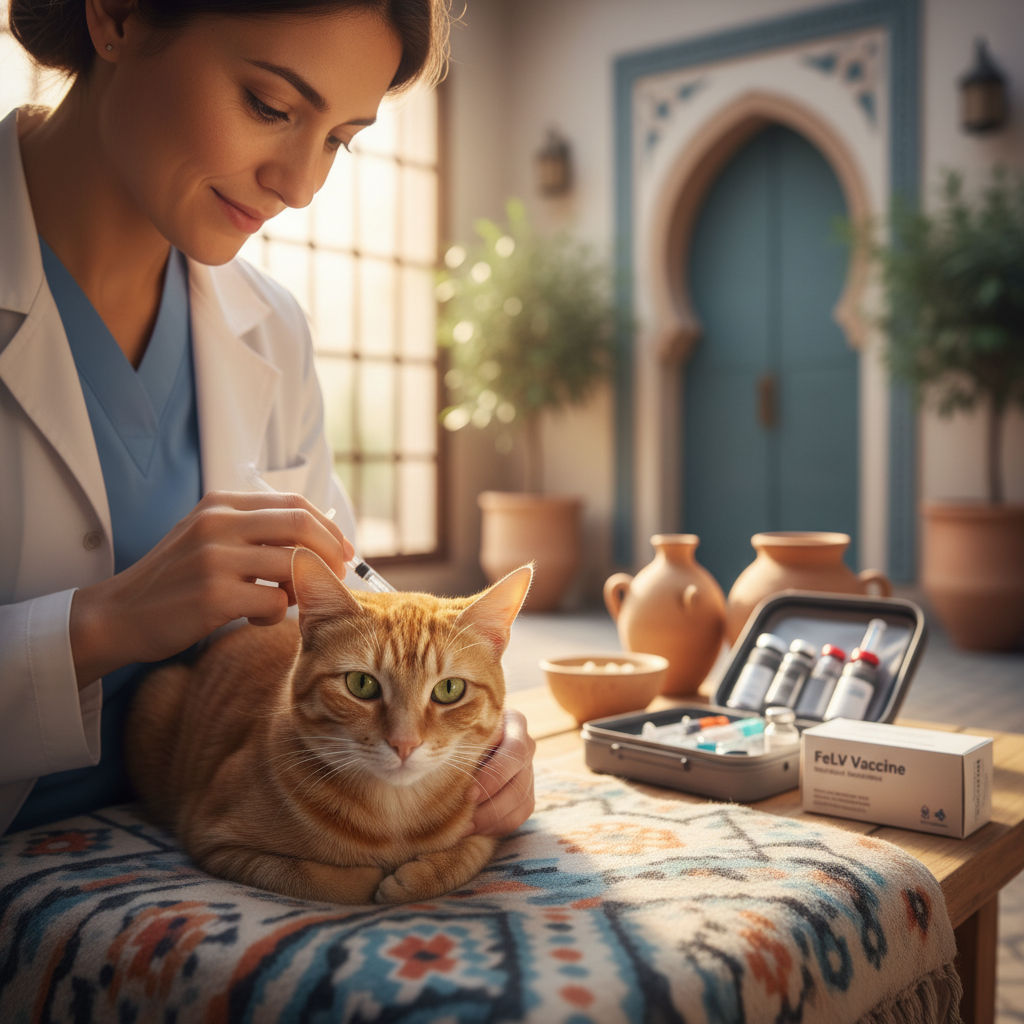
Understanding Feline Leukemia Virus (FeLV)
Feline Leukemia Virus (FeLV) is a retrovirus that affects only cats, posing a significant health threat globally and within Morocco. It can lead to a range of severe conditions, including immunosuppression, various types of anemia, lymphomas, and other cancers, making affected cats highly susceptible to secondary infections.
FeLV is primarily transmitted through close contact between cats, notably via saliva (e.g., mutual grooming, shared food/water bowls), blood (e.g., fighting, bites), urine, feces, and milk from an infected mother to her kittens. Given the large stray cat population in Morocco, awareness and prevention are paramount for owned cats and rescue efforts.
Testing for FeLV: The First Step
Testing for FeLV is crucial in several scenarios: for all new cats entering a household, for sick cats, for cats potentially exposed to infected individuals, or before administering the FeLV vaccine.
ELISA (Enzyme-Linked Immunosorbent Assay): This is the most common and affordable point-of-care test available in most Moroccan veterinary clinics. It detects the p27 antigen, a viral protein, in the cat's blood. A positive result indicates current viremia, meaning the cat is actively shedding the virus. It's important to re-test a positive cat in 4-8 weeks to confirm persistent infection, as some cats can transiently clear the virus. A negative result generally indicates no current viremia, though a very recent exposure might not yet show.
Confirmatory tests (IFA, PCR): For ambiguous results or a more detailed assessment, specialized laboratory tests like Immunofluorescent Assay (IFA) or Polymerase Chain Reaction (PCR) may be recommended. While IFA detects the antigen within blood cells and PCR detects viral DNA, these might require sending samples to specialized labs within Morocco or abroad, which can incur higher costs and longer turnaround times.
Prognosis for FeLV-Positive Cats: Hope and Reality
Receiving a FeLV-positive diagnosis is not an immediate death sentence. Many FeLV-positive cats can live for months or even years with proper care and management. The prognosis varies significantly:
Regressors: Some cats manage to clear the virus from their system or develop a latent infection where the virus is present but not actively replicating. These cats may live normal lifespans, though they should be monitored.
Persistently Viremic: The majority of cats with a confirmed positive ELISA result remain persistently infected. These cats are at a much higher risk of developing FeLV-associated diseases. While the average lifespan for persistently viremic cats is often cited as 2-3 years post-diagnosis, individual cases vary greatly, and many can enjoy a good quality of life for longer. The focus is always on maintaining quality of life and proactive health management.
Managing FeLV-Positive Cats: A Lifelong Commitment
There is no cure for FeLV, so management focuses on supportive care, minimizing stress, and preventing secondary diseases.
Regular Veterinary Check-ups: Biannual (every 6 months) veterinary visits are essential, including a thorough physical exam, complete blood count (CBC), biochemistry panel, and urinalysis. Early detection of any emerging health issues is paramount.
Nutrition: Feed a high-quality, balanced commercial cat food. Avoid raw meat diets, as immunocompromised FeLV+ cats are at higher risk for food-borne pathogens.
Parasite Control: Strict internal (deworming) and external (fleas, ticks) parasite control is vital. Many effective products, such as spot-ons (e.g., Advocate, Broadline) and oral tablets, are readily available in Moroccan veterinary clinics and pharmacies.
Vaccinations: Core vaccines (Rabies, FVRCP) are still important. Discuss with your veterinarian to ensure inactivated vaccines are used over modified live vaccines for immunocompromised cats. The FeLV vaccine is not for FeLV-positive cats.
Stress Reduction & Indoor Living: Provide a stable, low-stress indoor environment. This protects them from exposure to other pathogens and prevents transmission to other cats.
Prompt Treatment of Illness: Any signs of illness (lethargy, fever, appetite loss, diarrhea) warrant immediate veterinary attention. Antibiotics and other supportive medications are readily available in Moroccan pharmacies and vet clinics.
Antivirals/Immunomodulators: Feline interferon omega (Virbagen Omega) may be considered in some cases to modulate the immune response, though its availability and cost in Morocco can be a challenge. Discuss all treatment options with your veterinarian.
Preventing FeLV Transmission: Protecting Your Feline Family
Preventing the spread of FeLV is critical for the health of individual cats and the wider feline community.
Test All New Cats: Before introducing any new cat into your household, especially if you have other cats, test them for FeLV (and FIV). This is the single most crucial preventive measure.
Segregation: Ideally, FeLV-positive cats should live separately from FeLV-negative cats. If cohabitation is unavoidable, ensure separate food/water bowls, litter boxes, and strictly avoid mutual grooming and fighting.
Spaying and Neutering: These procedures significantly reduce fighting and roaming behaviors, thereby lowering the risk of FeLV transmission among community cats. Animal SoulSaver strongly advocates for Trap-Neuter-Return (TNR) programs to control population and disease spread.
Vaccination: The FeLV vaccine is highly recommended for all cats at risk of exposure (e.g., outdoor cats, cats in multi-cat households where FeLV status is unknown, or those with potential contact with FeLV+ cats). It's available in Morocco and provides significant protection, though it's not 100% effective and doesn't treat existing infections. Consult your vet about the appropriate vaccination schedule.
Hygiene: Regular cleaning and disinfection of litter boxes, food, and water bowls are important.
Animal SoulSaver's Message
FeLV presents a serious challenge, particularly in a country with a large stray cat population like Morocco. However, with proper testing, compassionate care, and diligent prevention, we can significantly improve the lives of our feline companions and protect the broader cat community. Always consult your veterinarian; they are your best resource for managing FeLV and ensuring the well-being of your beloved cat.