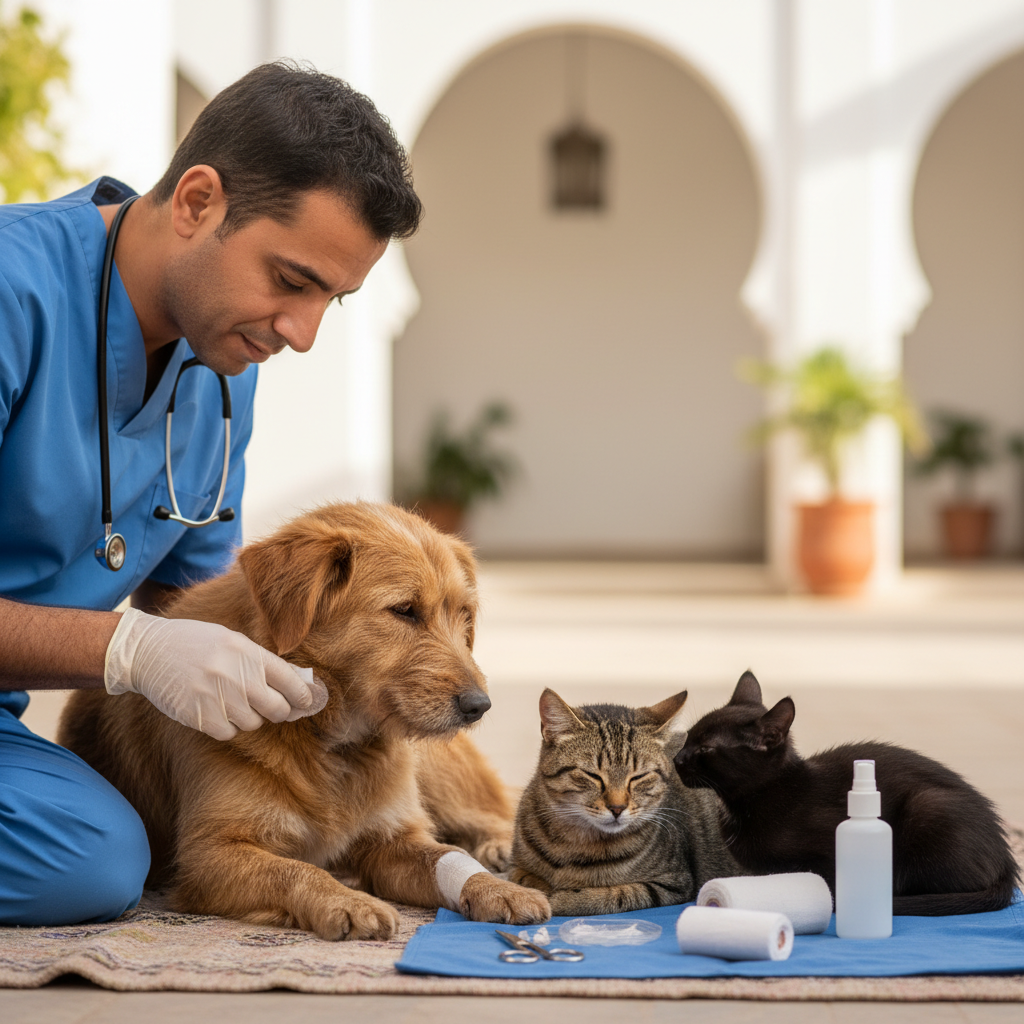
As dedicated animal protectors with Animal SoulSaver (جمعية حماية ارواح الحيوانات), we frequently encounter stray animals suffering from various injuries, with wounds being among the most common. Prompt and appropriate wound care is crucial not only to alleviate suffering but also to prevent life-threatening infections. This guide provides evidence-based advice for rescuers and compassionate individuals on managing wounds in stray animals, tailored with Morocco-specific considerations.
Assessing the Wound and Ensuring Safety
Before approaching any stray animal, prioritize your safety. Injured animals, even those normally docile, can be in pain and react defensively. Approach calmly, speak softly, and if necessary, seek professional help for restraint. Once safe, quickly assess the wound: is it actively bleeding? How deep does it appear? Is there visible foreign material? Are there signs of systemic illness (lethargy, fever)? This initial assessment guides your immediate actions.
The Cornerstone: Gentle Cleaning
The most critical step in wound care is thorough and gentle cleaning. This removes contaminants, bacteria, and dead tissue, significantly reducing the risk of infection. Use clean, potable water (bottled water is ideal if tap water quality is uncertain) or a sterile saline solution (0.9% sodium chloride, available in pharmacies or homemade by dissolving one teaspoon of salt in two cups of boiled and cooled water). Flush the wound extensively to dislodge debris. Avoid harsh scrubbing, which can damage delicate healing tissues. For heavily matted fur around the wound, carefully clip it away to prevent further contamination and allow for better observation and ventilation. A study by K. L. Gasser et al. (2018) in Veterinary Surgery emphasized the importance of adequate lavage pressure for effective wound debridement.
Antiseptics: Local Options and Wise Choices
Once thoroughly flushed, an antiseptic can be applied. In Morocco, several effective and readily available options exist:
- Povidone-Iodine (commonly sold as Betadine®): This is a broad-spectrum antiseptic. For wound cleaning, dilute it to a light tea color (e.g., 1 part povidone-iodine to 10 parts clean water). While effective for initial cleaning of dirty wounds, prolonged use on open wounds can be cytotoxic to healing cells. Rinse thoroughly after use if possible.
- Chlorhexidine Gluconate (available in various generic solutions or brands like Hibiscrub®): Chlorhexidine is an excellent broad-spectrum antiseptic with residual activity. It is less cytotoxic than povidone-iodine for delicate tissues. Use it diluted to 0.05% (follow product instructions, typically 1 part chlorhexidine solution to 40 parts water if starting with a 2% solution). It is a preferred choice for ongoing wound management.
- Hydrogen Peroxide: Generally discouraged for routine wound care due to its tissue-damaging effects. Its effervescent action can help lift debris from deep, contaminated wounds, but it should be used very briefly and followed by copious flushing with saline or water. Avoid its use on clean, granulating wounds.
Always avoid alcohol, strong household disinfectants, or any products not specifically designed for wound care, as these can cause significant pain and tissue damage.
Bandaging: Protection and Healing Support
Not all wounds require bandaging, especially minor, superficial scrapes that can benefit from air exposure. However, bandages are essential for:
- Protecting wounds from contamination and trauma.
- Absorbing exudate (wound fluid).
- Applying gentle pressure to reduce swelling.
- Keeping topical medications in place.
When bandaging, ensure your hands are clean. Use a non-adherent primary layer (e.g., sterile gauze, Telfa pads) directly over the wound to prevent sticking. Follow with an absorbent secondary layer (e.g., cotton wool, roll gauze) and a cohesive tertiary layer (e.g., Vetrap®, self-adhesive bandages) to secure it. Ensure the bandage is snug but not too tight – you should be able to insert two fingers comfortably underneath. In Morocco's warm and often humid climate, frequent bandage changes (daily initially, then every 2-3 days) are crucial to prevent maceration (softening and breakdown of skin due to moisture) and secondary infections. Monitor for swelling above or below the bandage, indicating it's too tight. Proper bandaging techniques are critical, as highlighted in veterinary textbooks such as 'Small Animal Surgery' by Fossum (5th ed., 2019).
When Are Antibiotics Necessary?
Systemic antibiotics are powerful medications and should not be used indiscriminately for every wound. Misuse contributes to antimicrobial resistance, a serious global health threat. Many simple, clean wounds heal perfectly well with diligent cleaning and local care without oral or injectable antibiotics.
Antibiotics are generally indicated for:
- Deep penetrating wounds.
- Heavily contaminated wounds (e.g., those exposed to feces or soil for an extended period).
- Bite wounds (which often introduce polymicrobial bacteria deep into tissues).
- Wounds showing clear signs of established infection (pus, spreading redness, significant swelling, foul odor).
- Wounds associated with systemic illness (fever, lethargy, loss of appetite).
- Abscesses or cellulitis.
Crucially, antibiotics are prescription-only medications. Administering them without veterinary guidance can be ineffective, harmful, and contribute to resistance. Always seek veterinary consultation for wounds requiring antibiotics. They will assess the wound, determine if antibiotics are warranted, and prescribe the correct type, dose, and duration. For complex or non-healing wounds, a veterinarian may also recommend wound debridement or surgical closure.
Ongoing Care and Professional Help
Monitor the wound daily for signs of healing (reduction in size, healthy pink granulation tissue) or deterioration (increased redness, swelling, pain, pus, foul odor). If the wound is not improving, if the animal develops fever, lethargy, loss of appetite, or if you are unsure about the severity or proper treatment, immediately contact a veterinarian. Animal SoulSaver is dedicated to helping stray animals and can provide guidance on finding veterinary assistance in Morocco. Your compassionate care can make all the difference in a stray animal's recovery journey.