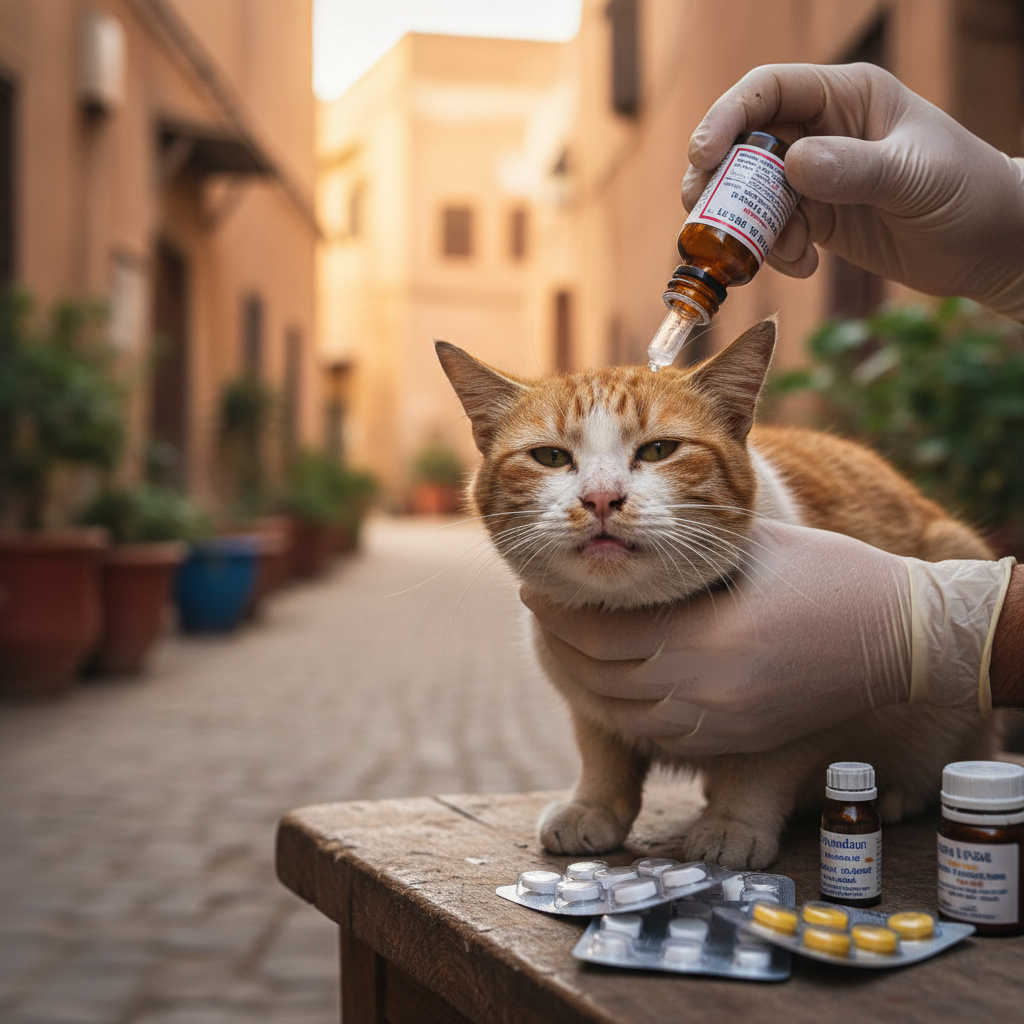
Feline Upper Respiratory Tract Infection (FURTI), often referred to as 'cat flu', is a widespread and debilitating condition among Morocco's street cat population. It's a leading cause of morbidity and mortality, particularly in kittens and immunocompromised adults. As Animal SoulSaver, we understand the challenges rescuers face in accessing immediate veterinary care for every sick cat. This guide provides practical, evidence-based protocols using medications readily available in Moroccan pharmacies, while always emphasizing that veterinary consultation is the ideal first step.
Understanding Feline Upper Respiratory Tract Infection (FURTI) FURTI is typically caused by a combination of viral and bacterial agents. The primary viral culprits are Feline Herpesvirus-1 (FHV-1) and Feline Calicivirus (FCV). These viruses weaken the cat's immune system, paving the way for secondary bacterial infections by organisms like Bordetella bronchiseptica and Chlamydophila felis. Environmental stressors common in Morocco's diverse climate – from the cold, damp winters in mountainous regions to dusty conditions in arid areas – coupled with poor nutrition and overcrowding, exacerbate the disease.
Symptoms are often unmistakable: sneezing, clear to thick yellow or green nasal and ocular discharge, conjunctivitis (red, swollen eyes), lethargy, anorexia, fever, and sometimes oral ulcers (especially with FCV). Early recognition and intervention are crucial.
The Cornerstone of Treatment: Supportive Care Regardless of medication, supportive care is paramount and can often be life-saving: Warm, Dry, and Quiet Environment:* Provide a sheltered space away from drafts, rain, and cold. A simple box lined with blankets can make a huge difference. Hydration and Nutrition:* Sick cats often lose their sense of smell, making them reluctant to eat. Offer highly palatable, strong-smelling wet food, slightly warmed. Syringe-feeding a gruel of recovery food or kitten formula might be necessary. Ensure constant access to fresh water. Dehydration is a significant threat. Nasal and Ocular Hygiene:* Gently wipe away discharge from the nose and eyes with a soft cloth dampened with warm water or physiological saline solution (Sérum physiologique), widely available in Moroccan pharmacies. For nasal congestion, carefully administer a few drops of saline into each nostril or use steam therapy (e.g., taking the cat into a steamy bathroom for 10-15 minutes, ensuring supervision and no direct contact with hot water).
Medications from Moroccan Pharmacies: Practical Protocols When supportive care isn't enough, or if secondary bacterial infection is suspected, certain medications available over-the-counter or with a prescription from a general practitioner (though ideally, a vet prescribes) can be life-saving. Remember, these are off-label uses and require careful consideration.
1. Antibiotics (for bacterial infections): Doxycycline: Highly effective against Chlamydophila felis and Bordetella bronchiseptica*. Available as tablets (e.g., Doxycycline Biogaran, Doxycycline Mylan) or capsules. Dosage:* 5-10 mg/kg every 12-24 hours orally for 7-10 days. Administration:* Crucially, always administer with food or a small amount of water, followed immediately by at least 2-5 ml of water via syringe. This prevents esophageal strictures, a severe side effect in cats. Amoxicillin-Clavulanate:* A broad-spectrum antibiotic effective against many common bacterial pathogens. Available as tablets (e.g., Augmentin, Clavulin) or oral suspension. Dosage:* 12.5-25 mg/kg every 12 hours orally for 7-10 days. Administration:* Can be given with or without food. The suspension form is often easier for cats. Topical Ocular Antibiotics:* For severe conjunctivitis or ocular discharge, ophthalmic drops or ointments can be beneficial. Chloramphenicol eye drops (e.g., Collyre Chloramphénicol) are often effective and available. Dosage:* 1-2 drops into the affected eye(s) 3-4 times daily.
2. L-Lysine (for Feline Herpesvirus-1): While its efficacy is debated in recent veterinary literature, L-Lysine is a common supplement some rescuers use to help manage FHV-1 symptoms. It's an amino acid believed to inhibit viral replication. Human L-Lysine supplements are available in pharmacies. Dosage:* 250-500 mg orally twice daily. Administration:* Can be mixed with wet food.
Important Considerations for Administration: Pilling:* For tablets, gently hold the cat's head, open its mouth, place the pill at the back of the tongue, and close the mouth, gently stroking the throat to encourage swallowing. Follow with water. Liquid Medications:* Use a small syringe (without a needle) to administer liquids into the side of the cat's mouth, slowly to prevent aspiration. Consistency:* Complete the full course of antibiotics, even if the cat appears better, to prevent recurrence and antibiotic resistance.
Prevention and When to Seek Veterinary Help: Prevention through Trap-Neuter-Return (TNR) programs, which often include vaccination (if resources allow), good nutrition, and reducing stress, is key. Isolate sick cats to prevent spread.
Seek veterinary attention immediately if: * The cat is struggling to breathe (open-mouth breathing, labored breaths). * Symptoms worsen or show no improvement after 3-5 days of treatment. * The cat is severely dehydrated or completely refuses to eat/drink. * Kittens are affected (they deteriorate rapidly). * Any neurological symptoms appear.
This guide is for educational purposes and to empower rescuers in urgent situations. Animal SoulSaver strongly advocates for professional veterinary diagnosis and treatment whenever possible. Your dedication gives these vulnerable souls a fighting chance.